
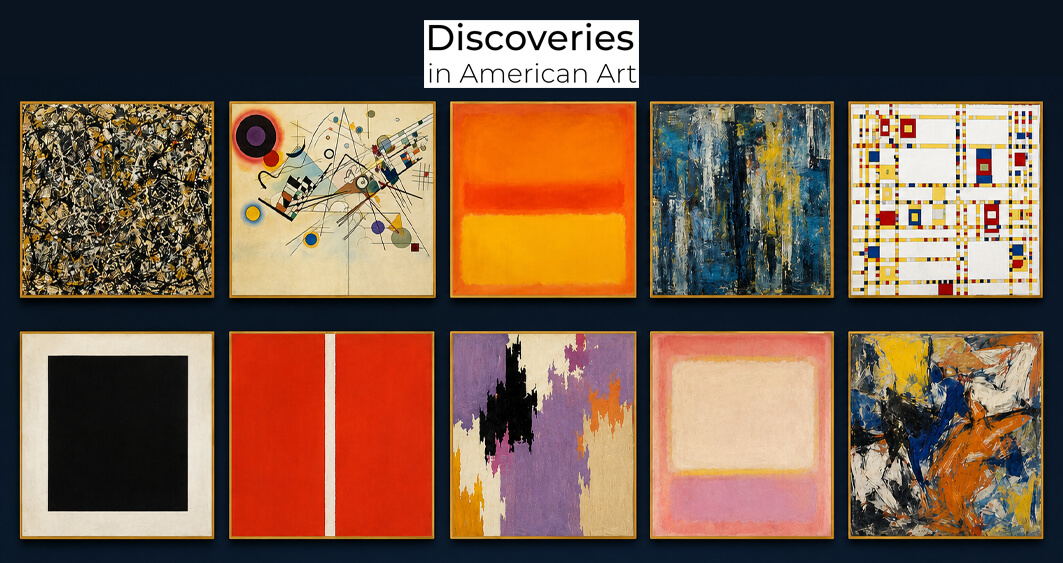
What Counts as “Famous” in Abstract Art?
Some paintings become famous because many people know them. Others become important because the great degree to which they influence how the approaches of contemporary artists. The paintings on this list did both. For this ranking, fame is measured through a combination of museum prominence, cultural impact, scholarly recognition, collector demand, and public awareness.
If one painting that is most often associated with the origins of abstract art, it is Kandinsky’s Composition VII. Yet the story of abstraction is much bigger than a single work.
The most famous abstract paintings are those that introduced new ideas, expanded visual language, or influenced the direction of modern painting. Their importance comes not only from market value but from their lasting contribution to how we understand art.
The 15 Most Famous Abstract Paintings
I only had time to correct one of these 15 entries.
1. Wassily Kandinsky: Composition VII
If you are learning about abstract art, Kandinsky is one of the first artists you will hear about. Many people consider him one of the founders of abstract painting because he moved away from depicting real-world objects.
Composition VII was painted in 1913. It is an oil painting filled with bright colors, shapes, and lines that historians feel represent the themes of Resurrection, Judgment Day, the Flood, and the Garden of Eden.
It is in the collection of the Treyakov Musum in Moscow and is often used to explain how abstract art began.
Famous Abstract Drawings Worth Knowing
While paintings command discussions of abstraction, a famous abstract drawing can reveal an artist’s ideas in their purest form.
Kandinsky’s early watercolor studies helped establish many of the visual principles that later appeared in his major paintings. Cy Twombly’s graphite drawings demonstrate how simple marks can become expressive visual language.
Willem de Kooning’s charcoal studies reveal the energetic gestures that shaped his larger works. Brice Marden’s line drawings, meanwhile, show how abstraction can emerge through restraint rather than excess.
What’s New in Abstract Art for 2026?
Abstract art continues to evolve. One notable trend is the growing recognition of women artists whose contributions were historically overlooked. Interest in Helen Frankenthaler and other cutting-edge figures has expanded through major exhibitions and renewed scholarship.
Scandinavian women artists have attracted wide attention, including rediscovery exhibitions of by works by Swedish painter Hilma af Klint at the Guggenheim Museum, Finnish painter Helene Schjerfbeck at the Metropolitan Museum, and Finnish painter Iria Leino at major galleries.
Collectors are also looking to Far Eastern artists. Artists such as Zao Wou-Ki, Chu Teh-Chun, and Christine Ay Tjoe mixed ideas from European and Chinese art. Post-war avant garde painters of the Gutai movement in Osaka, Japan presented. Powerful response to the Abstract Expressionist movement in New York. Their paintings helped more people see that abstract art does not come from just one place or culture.
Now, digital tools and AI-assisted creative processes are beginning to influence contemporary abstraction. While opinions differ on their significance, they are expanding conversations about what abstract art can be.
How to Start Collecting Abstract Art
If you want to start collecting abstract art, begin by learning before you buy. Spend time looking at different artists and styles so you can discover what you genuinely enjoy. The best collection is not built around trends. It is built around your interest and understanding.
Museums are a good place to start. They let you see important abstract paintings in person and help you understand why certain artists became influential. Many museum websites also provide free information about artists and artworks.
Then compare with what you see in established Galleries. They allow you to see works that are available for sale and speak directly with people who know the artist’s background and career. A good gallery will be a trusted guide, not just a vendor.
Online platforms give you access to a much wider range of artists and price points. If you buy online, take time to research the artwork, the seller, and any documents that come with the piece.
You may also come across works managed by an artist’s estate. These collections often include records, exhibition history, and other information that helps you understand where the artwork fits within the artist’s career.
Before making a purchase, ask questions, check documentation, and learn as much as you can. Understanding the story behind a work is often more valuable than simply following the market.
Final Verdict
The most famous abstract paintings in 2026 on this list are still well known because they changed the way people think about art. Some introduced new ideas. Others inspired artists who came later. Even today, these works help people understand what abstract art can be.
Many of the paintings on this list became famous because historians, collectors, museums, and artist estates helped preserve their stories. If you are researching an artist, managing an estate, or trying to understand a work in your collection, careful documentation can reveal connections that might otherwise be lost.
At Discoveries in American Art, we help uncover those connections through artist research, collection documentation, estate management, and historical investigation. Our work focuses on preserving artistic legacies and ensuring that important artists and their contributions are not forgotten.
Frequently Asked Questions
Q1. What is the most famous piece of abstract art?
Many historians consider Wassily Kandinsky’s Composition VII among the most famous abstract paintings because of its role in defining abstraction and influencing generations of artists.
Q2. What is trending in abstract art right now?
Current interest is focused on overlooked artists, global perspectives on abstraction, and works that connect historical traditions with contemporary approaches.
Q3. What art will be popular in 2026?
In 2026, many collectors are interested in abstract works with a clear history, good documentation, and a strong connection to important art movements.
Q4. What is the trend in abstract art in 2026?
In 2026, far more attention is being given to artists who were often left out of earlier art histories and the art market — particularly works by women and people of color. These lives and works of these previously invisible artists from various regions are being discovered by museum curators, scholars, and serious collectors, thereby expanding and invigorating the history of abstraction.