
Abstract Expressionist Paintings
Abstract Expressionist Paintings From Estate Collections
Abstract Expressionism changed the course of American art. Emerging after World War II, the movement encouraged artists to move beyond traditional representation and explore emotion, gesture, color, and personal experience through abstraction. While a small group of artists became internationally recognized, many others pursued similar ideas outside the major galleries, museums, and art centers that shaped the movement's public narrative.
At Discoveries in American Art , we specialize in identifying, evaluating, and promoting works from artist estate collections. Many of the abstract expressionist paintings we encounter have remained outside the marketplace for decades, offering collectors and scholars an opportunity to engage with works that have not been widely exhibited or studied.

What Is Abstract Expressionism
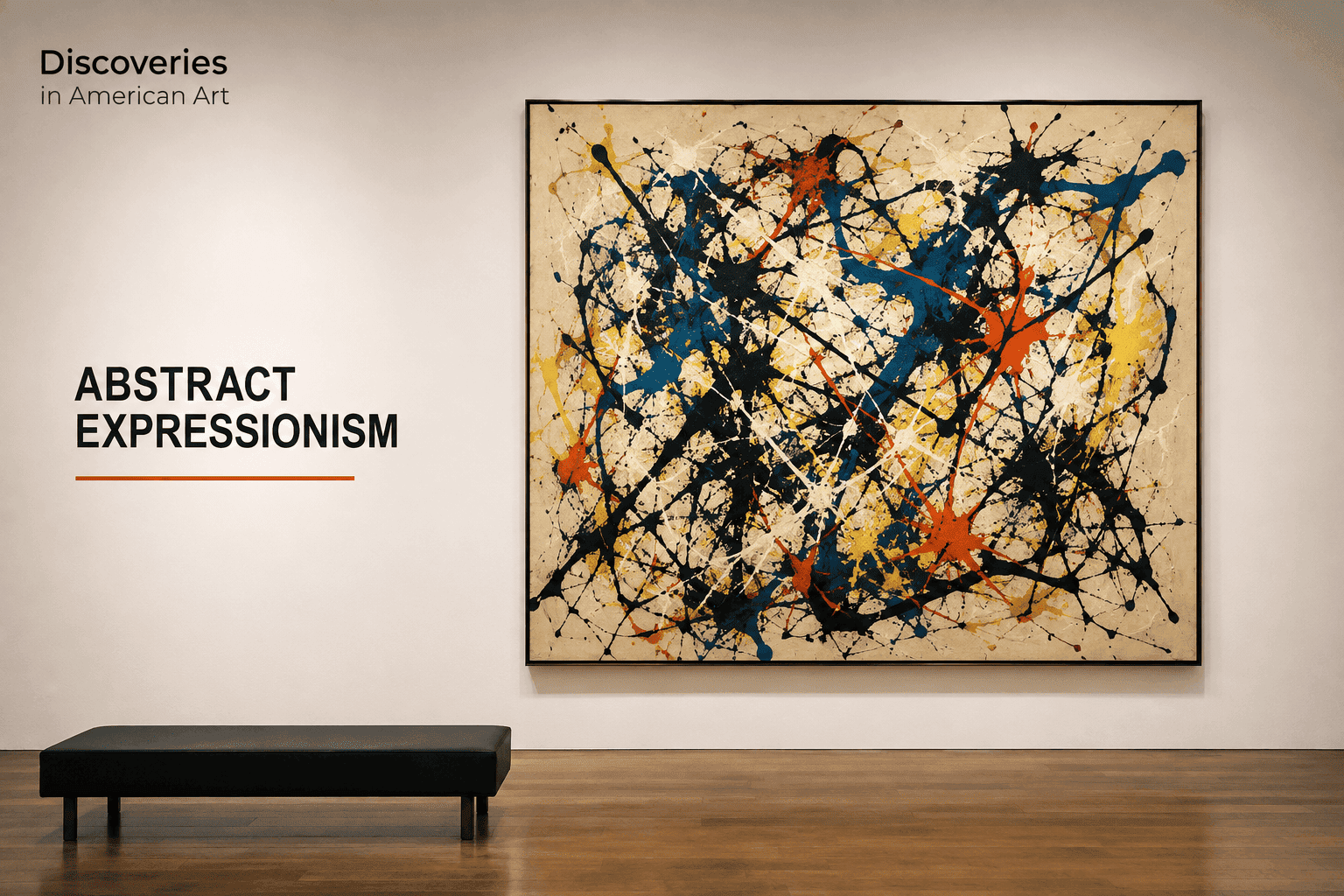
Abstract Expressionism emerged in the United States during the 1940s and 1950s and became the nation's first internationally influential modern art movement. Artists embraced abstraction as a way to communicate emotion, energy, and individual expression rather than depict recognizable subjects.
The movement is often associated with the New York School, but its influence extended far beyond New York. Painters across the country adopted and adapted its ideas, creating highly personal interpretations of abstraction. Today, abstract expressionist paintings remain among the most studied and collected works in American art.
Gestural and Color-Field Styles
Although Abstract Expressionism included many approaches, two broad tendencies emerged.

Action Painting Techniques
Action painting emphasizes movement, spontaneity, and the physical act of painting. Artists such as Jackson Pollock, Willem de Kooning, and Franz Kline created works that reveal the energy of their process through expressive brushwork, drips, and dynamic compositions.
These paintings often feel immediate and highly personal, inviting viewers to engage with the artist's creative decisions as they unfold across the canvas.

Color-Field Painting Approach
Color-field painters explored emotional depth through large areas of color and simplified compositions. Artists including Mark Rothko, Barnett Newman, and Clyfford Still used scale, atmosphere, and subtle color relationships to create contemplative viewing experiences.
For collectors, understanding the distinction between gestural and color-field approaches can provide useful context when evaluating abstract expressionist paintings.
Pioneers of the Movement
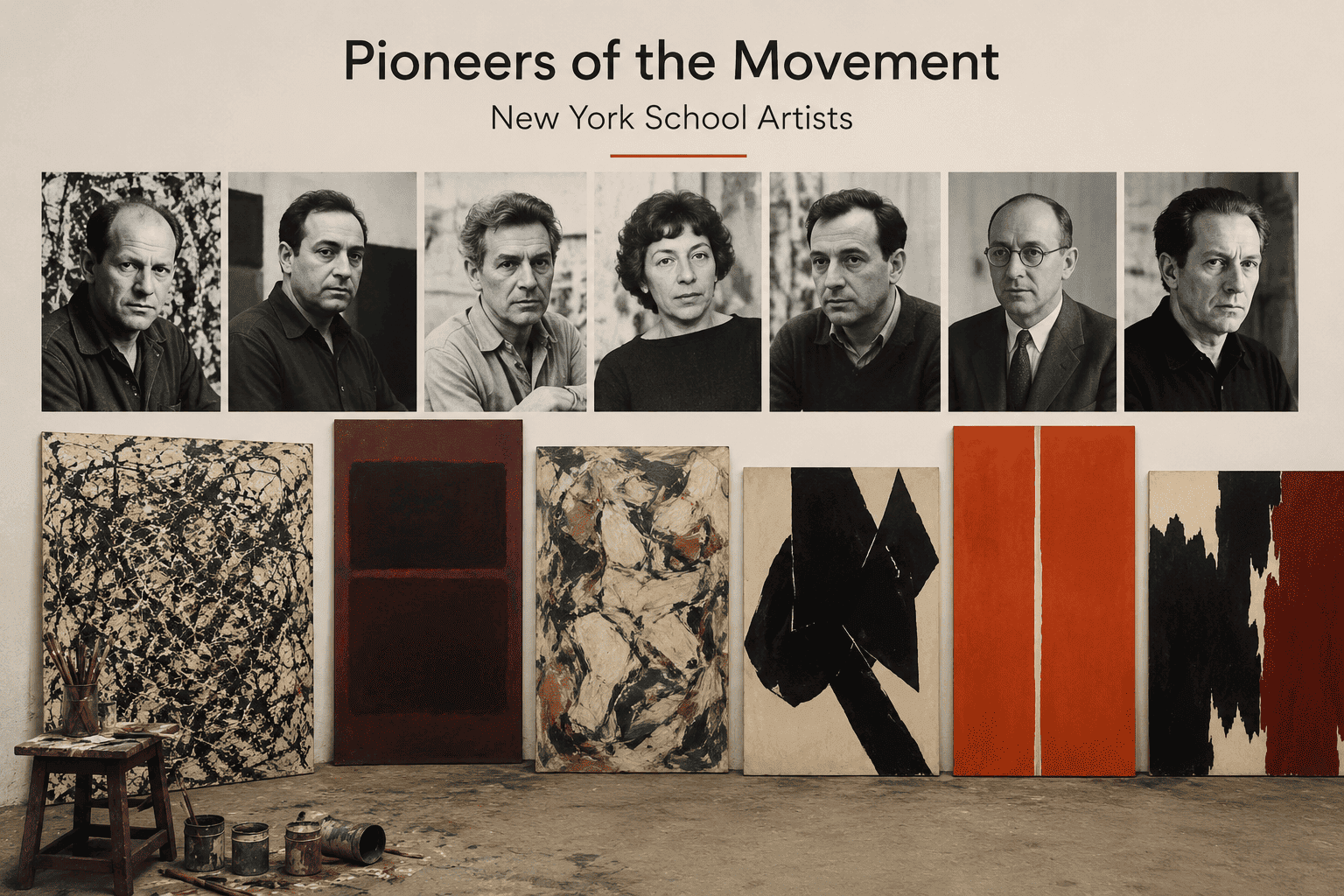
New York School Artists
The movement's best-known figures include Jackson Pollock, Mark Rothko, Willem de Kooning, Lee Krasner, Robert Motherwell, Barnett Newman, and Clyfford Still. Their work helped establish Abstract Expressionism as a defining force in postwar American art.
Yet the movement's history extends beyond these familiar names. Many accomplished artists explored similar ideas while working in regional art communities, teaching institutions, or private studios. Artist estates frequently reveal how broad and diverse the movement truly was.
Artist Estate Collection Discoveries
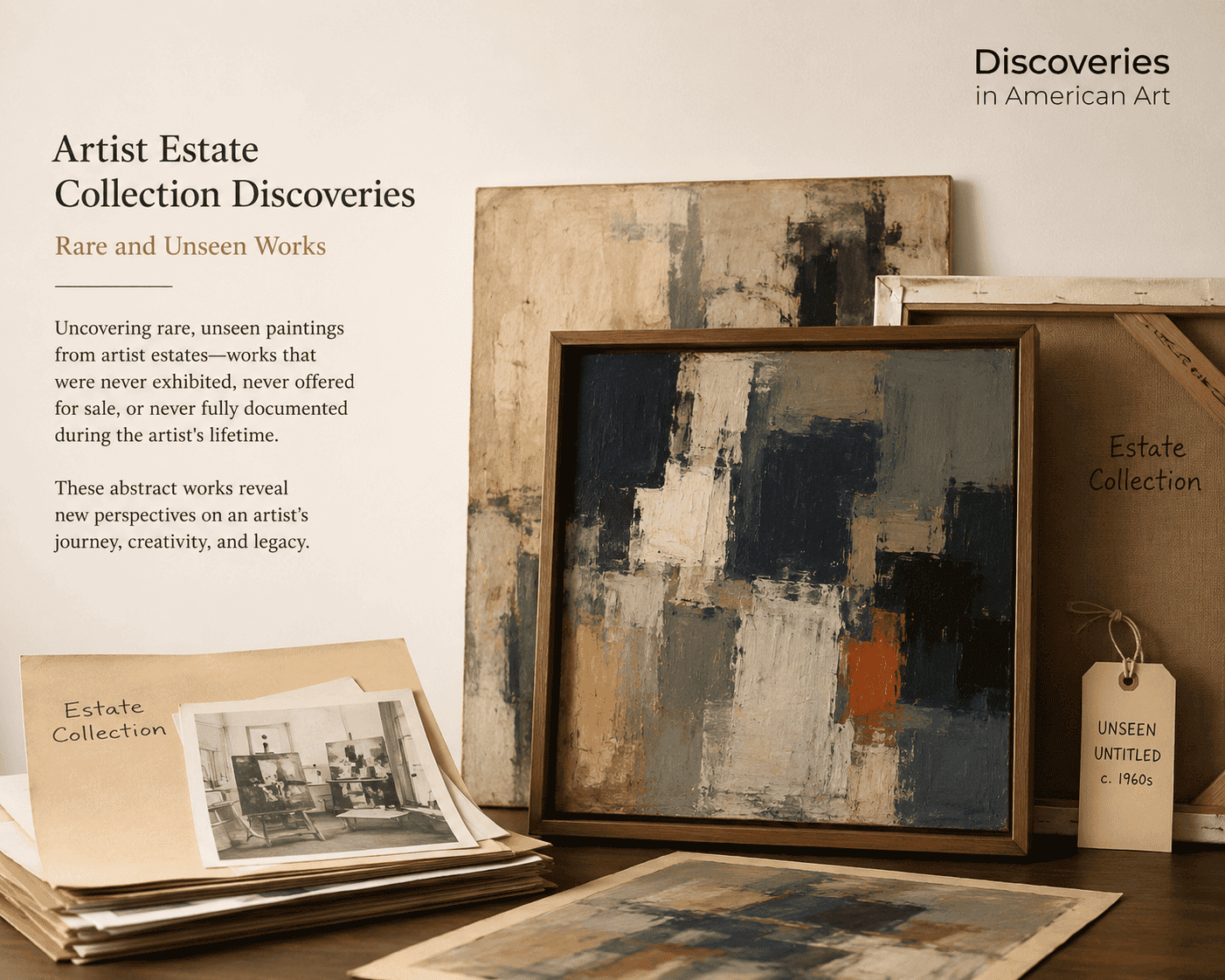
Rare and Unseen Works
One of the most compelling aspects of our work involves uncovering paintings that have remained within artist estates for decades. These discoveries often include works that were never exhibited, never offered for sale, or never fully documented during the artist's lifetime.
Abstract paintings from artist estate collections can provide valuable insight into an artist's development, experimentation, and creative process. They may reveal overlooked periods, unexpected influences, or bodies of work that challenge existing assumptions about an artist's career.
Many of our artist estate collection discoveries involve painters who worked outside major art market centers. Their work may have received little attention during their lifetime despite substantial artistic achievement. Through research, provenance analysis, and evaluation, these paintings can be placed within a broader historical context.
For collectors, estate collection discoveries offer something increasingly rare: direct access to works that have not circulated repeatedly through galleries, auctions, and private sales.
Why Choose Estate-Sourced Paintings
Provenance and Authentication
Provenance is one of the most important factors in collecting art. Estate-sourced paintings often come with a direct chain of ownership that can help establish authenticity and historical context. Supporting documentation, archival materials, photographs, correspondence, and studio records can strengthen the understanding of a work's history.
At Discoveries in American Art, provenance research is an important part of the evaluation process. Every collection presents a different set of questions, and careful documentation helps answer them.
Investment and Collector Value
Collectors are often drawn to estate-sourced works because they have not been extensively traded in the marketplace. Their history remains closely connected to the artist, and their significance may not yet be fully recognized.
While no artwork should be acquired solely as a financial investment, paintings from Artist Estate Collections often offer opportunities for discovery that are unavailable through more established market channels.
Our Estate Collection Process
How We Source Paintings
Our work begins with artist estates, private collections, heirs, and representatives seeking guidance regarding documentation, valuation, or collection management. We evaluate artworks individually and within the broader context of the artist's career.
This process frequently involves provenance research, historical analysis, condition review, and comparison with related works.
Working With Estate Representatives
Many families inherit substantial collections without inventories, catalogues, or exhibition records. We work closely with estate representatives to organize, document, and evaluate these materials while preserving the historical integrity of the collection. Our goal is not simply to identify value, but to understand the artist's contribution and help establish a framework for long-term stewardship.
Featured Abstract Paintings for Sale
Our inventory of abstract expressionist Paintings changes as new collections become available. Featured works may include gestural abstractions, color-field paintings, mixed-media works, and previously unseen pieces from artist estates.
For current availability, pricing, and collection information, please contact us directly.
Request an Estate Collection Appraisal
Do you own abstract paintings that may be connected to an artist estate? Have you inherited a collection and need guidance regarding documentation, provenance, or valuation?
Discoveries in American Art provides appraisal, research, and collection management services for artist estates and private collections. Whether you are seeking information about a single painting or an entire estate, we welcome the opportunity to discuss your collection.
Contact us to schedule a consultation or request an appraisal.
Frequently Asked Questions
Abstract expressionist paintings are works created within the Abstract Expressionist movement, which emphasized personal expression, abstraction, gesture, color, and emotional impact rather than traditional representation.
Documentation, provenance records, family ownership history, studio materials, and estate archives can often help establish whether a painting originates from an artist's estate collection.
Estate collection discoveries often include previously unseen works with strong provenance and limited market exposure. These qualities can make them particularly appealing to collectors.
Key figures include Jackson Pollock, Mark Rothko, Willem de Kooning, Lee Krasner, Robert Motherwell, Barnett Newman, and Clyfford Still.
The first step is documenting the collection and gathering any available provenance information. Professional appraisal can then help establish value and historical context.
Many collectors are attracted to Abstract Expressionism because of its historical importance and continuing influence. However, collecting decisions should be based on quality, provenance, and personal interest rather than investment potential alone.
We provide research, provenance evaluation, and appraisal services that help collectors and estates better understand the authenticity and significance of artworks within a collection.