A Personal World of Form
The rediscovery of John Matt illuminates one of America’s most significant sculptors
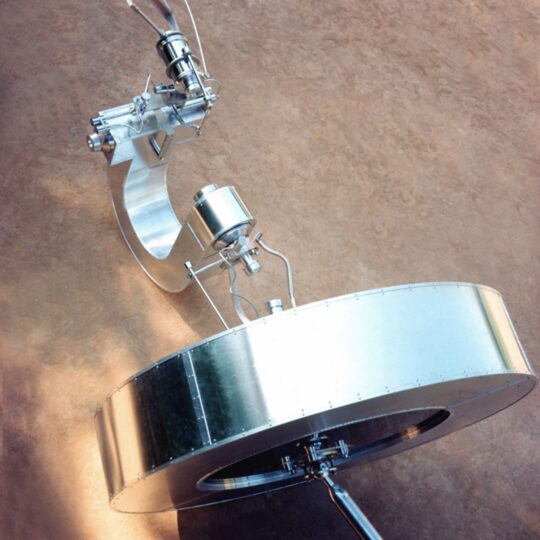
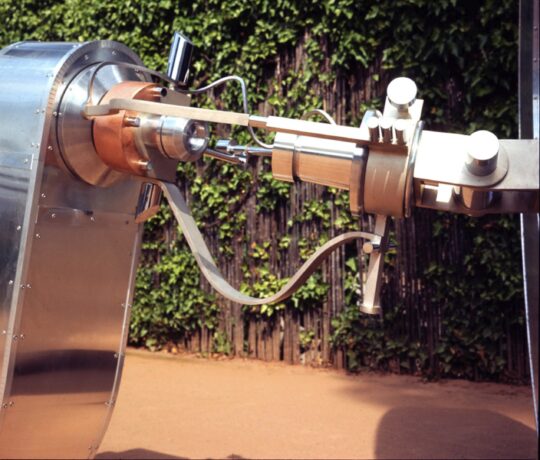
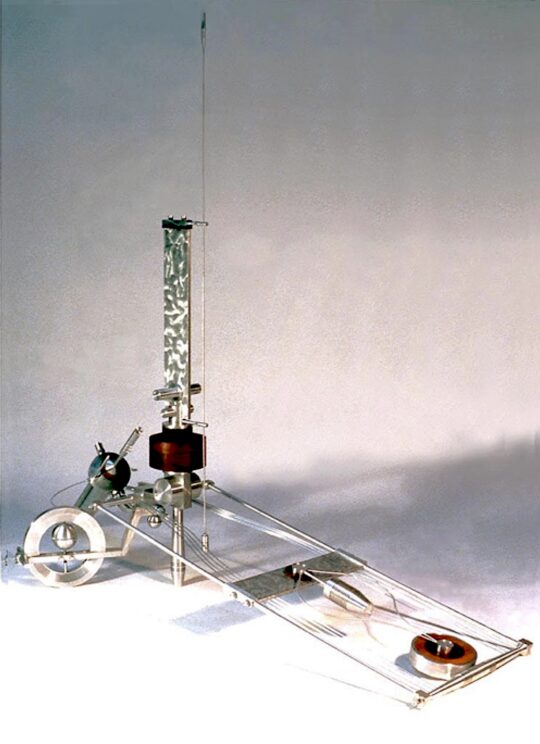
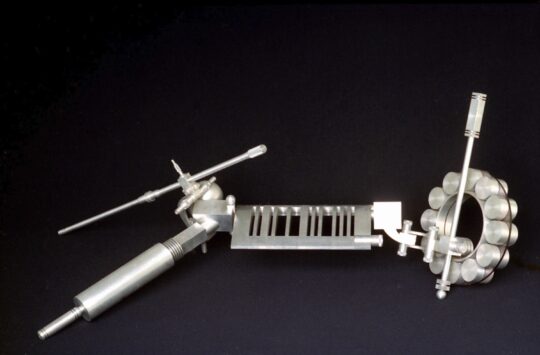
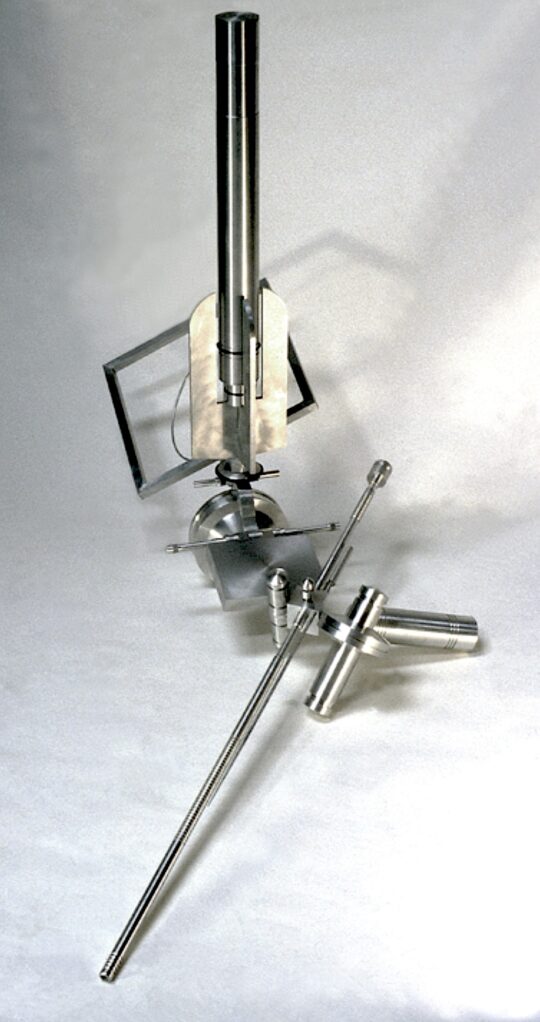
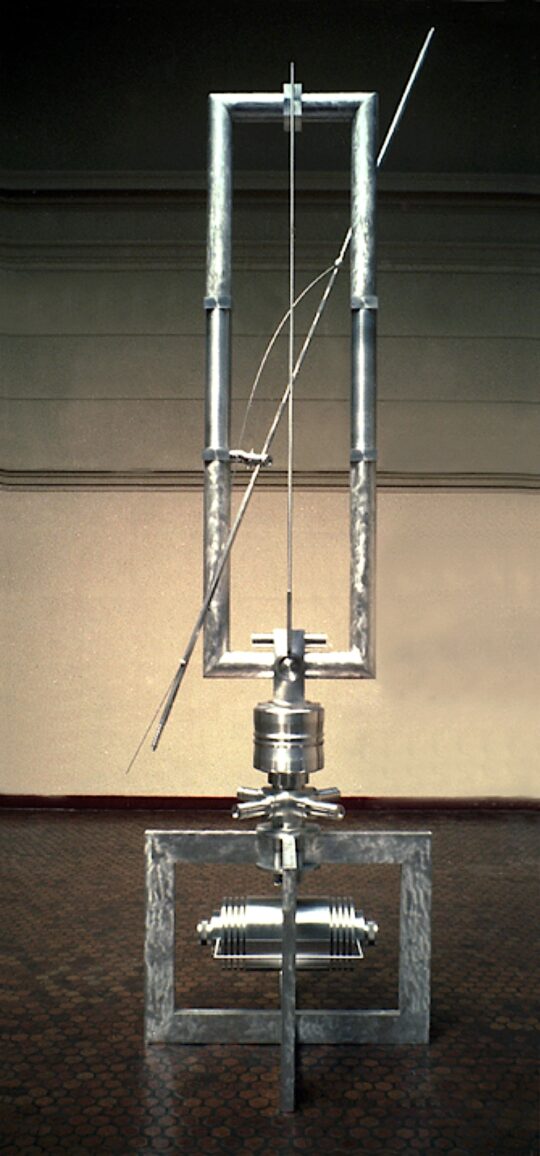
Matt’s sculptures are gleaming geometric abstractions, appearing to be machines of the future. He created what one art critic called a “new class of forms — combining the biomorphic with the technomorphic.”1 Indeed, his sculpture continues to resist the influence of any modernist who preceded him. Most art historians will sense an affinity with the Russian avant-garde artists of the early 20th century. But these and other attempts to identify masters to whom Matt owes a great debt wind up as dead ends.
Guided by a restless imagination
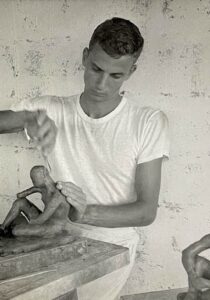
Born in 1935 in Richmond, Virginia, John Anthony Matt revealed an inventive spirit from an early age. His parents noticed he was continually pushing creative boundaries, so when he was around thirteen, they arranged private lessons with Adèle Clark [1882–1983] — a major figure in Richmond’s cultural and political life for nearly three-quarters of a century including the Art Club of Richmond. He soon turned the family’s garage into his painting studio. In high school, he was known not only for his cartoons for the school paper but for quietly taking fresh pieces of chalk from the blackboard sill as he entered the classroom. As lessons unfolded, he used a pin to carve small heads into the chalk — stacked one atop another like a totem pole. Even in the art studio he would collect old broken Plaster of Paris molds discarded by the students and carve them into figures with an Exacto knife. His summer jobs included painting designs for a flag manufacturing company in Richmond.
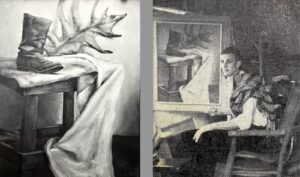
In his formative years, Matt worked through the conventional subjects that have long grounded artistic training—landscapes, still lifes, figures, and wildlife. From 1955 to 1957 he studied at the Ringling College of Art and Design in Sarasota, Florida, where a 1957 still life of a boot set against seaweed already signaled a nascent surrealist sensibility. The painting earned him the college’s top award and revealed an imagination tugging at the edges of tradition.
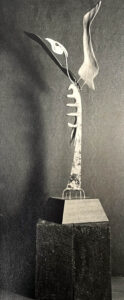
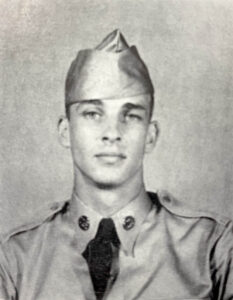
His trajectory, however, was swiftly interrupted when he was drafted into the U.S. Army. After basic training at Fort Jackson, South Carolina, he was stationed in Orléans, France, along the Loire River. There he served as an illustrator and produced graphics for military communications. His most ambitious assignment was an enormous map of Europe—fifteen feet high and forty-five feet wide. He attacked the task with expressive energy, deploying color freely and intuitively, not realizing its precise representational function within military cartography. The resulting chromatic liberties, innocent though they were, did not go unnoticed at the Headquarters of the U.S. Army Communications Zone for all of Europe.
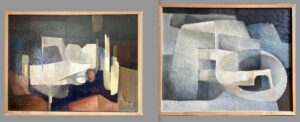
After his military service, Matt entered the Pennsylvania Academy of the Fine Arts in 1959. He focused on painting and won the Thouron Prize the following year, yet the academy’s celebrated sculpture instructor, Walker Hancock [1901–1998], left him unmoved. American sculpture had already shifted decisively away from classical muscularity toward modernist abstraction, and Hancock’s approach felt out of step with the artistic world Matt sensed emerging around him.
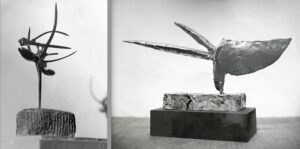
The pivotal catalyst came in the summer of 1960, when he attended the Skowhegan School of Painting & Sculpture in Maine. There he encountered David Smith [1906–1965], the great Abstract Expressionist sculptor whose geometric forms expanded the language of welded metal, and Robert M. Cronbach [1908–2001], a figurative architectural sculptor who would soon embrace stripped-down abstraction. However, Matt was deeply inspired to instead explore decidedly biomorphic forms. Nordic I from 1960 (welded steel, 6 inches) suggests a biomorphic ballet with the calligraphic flair of Miro’s brushstrokes. Skowhegan’s sculpture facilities—open courtyard, kiln, forge, and sheds dedicated to metal, wood, stone, clay, and plaster—formed an ideal experimental arena. Matt won the Sculpture Prize that summer, and after a fire destroyed his and some other students’ works, the school rectified the loss by inviting him to return for the summer of 1961. Continuing his exploration of biomorphic forms, he welded steel in his other-worldly Holothurian — one of the ocean’s bizarre creatures better known by its innocuous name, the sea cucumber.
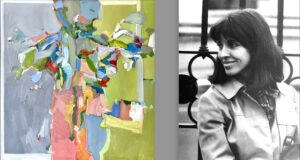
1962 proved a buoyant and transformative year. Matt married Mary Billingsly, an abstract painter he met at Skowhegan while she was completing her MFA at Boston University. That year, he received his first major commission: a large abstract welded relief for the façade of the Institute for the Crippled and Disabled at 340 East 24th Street in New York, accompanied by the installation of two abstract mobiles for the same institution. He also won the Chaloner Prize Foundation Award, enabling the couple to spend eight months traveling through Europe, with extended sojourns in Florence, Holland, and Scandinavia.
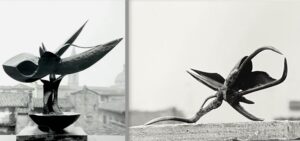
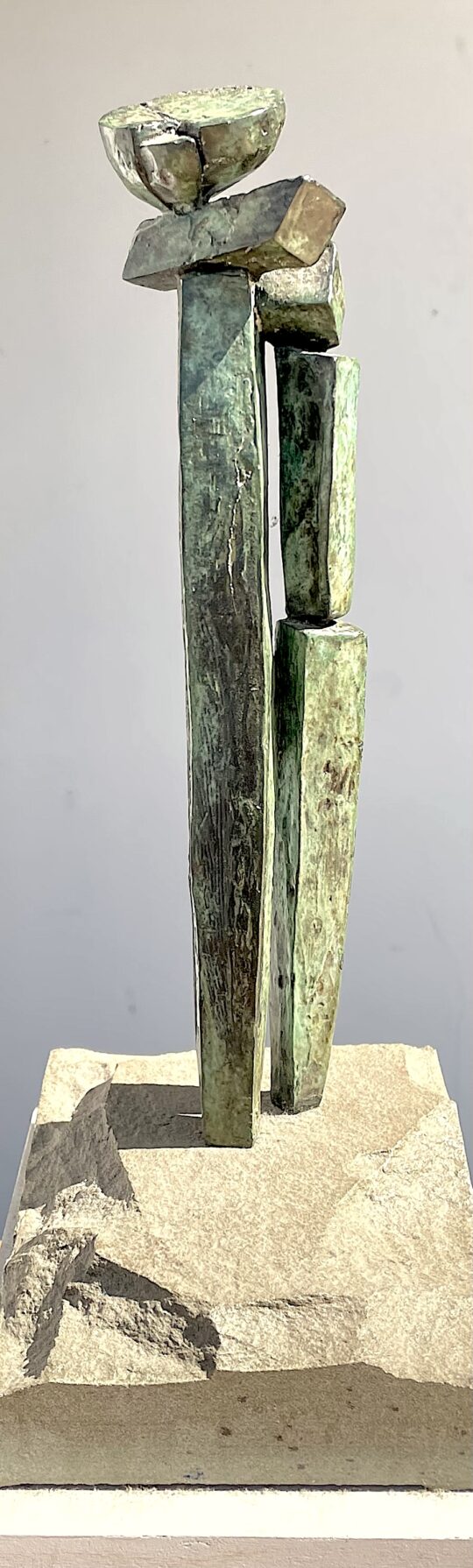
Returning to the United States in 1963, Matt renovated a former chicken barn in Killingworth, Connecticut. He also constructed an A-frame studio behind it that became the nucleus of his early sculptural practice. The non-objective abstract canvases he had begun at P.A.F.A. and refined at Skowhegan now gave way to a more distinctly biomorphic vocabulary as he immersed himself in three-dimensional form. The sculptures of this period — cast in bronze, welded in steel and brass, brazed in copper — appear at once organic and engineered. Their surfaces migrate from rough and irregular to polished and planar, as though the boundary between geological growth and mechanical invention were still actively being negotiated.
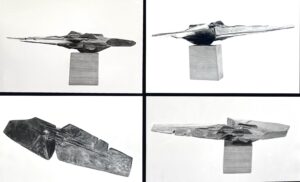
A side view of Matt’s Slab I (1963) evokes the trajectory of a meteor streaking through space, though its title points to a more grounded origin: a live-edge slab of wood. Viewed from above, however, the form suggests something engineered — an aircraft wing or remnant lifted from the sea floor. Untitled (1962) is a biomorphic abstraction of welded steel retaining the vocabulary of ocean life, with the feel of a deep-sea fish or squid.
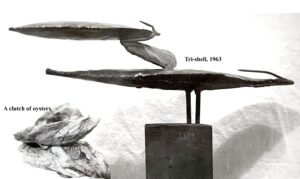 Tri-shell (1963) is unabashedly organic. Its three stacked forms echo the way oyster shells attach to each other via natural accretions to form clutches, each layer building upon the last in a quiet choreography of growth in the creation of an oyster reef.
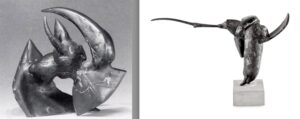
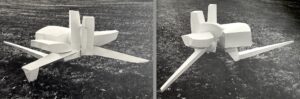
Coinciding with Matt’s focus upon biomorphic abstraction during 1960 to 1963, was the emergence another young sculptor who would become renowned as the country’s leading sculptor in this style. Richard Howard Hunt [1935–2023] and Matt were on the same track but while they never knew of each other or their works, their affinities clearly attest to simultaneous inventions created independently during the same period. Both employed found metals and, through welding and assemblage created what Hunt would call “hybrid forms” — evoking plant growth and the movement birds taking flight.1 Whereas Hunt pursued biomorphic abstraction throughout his life, Matt’s restless imagination persisted, and he was soon tackling new aesthetic avenues. In 1963, when he created the mysteriously ambiguous Slab I he was also exploring how monumental architectonic forms should relate to their intended environment. Moreover, his Tripedal of 1963 is the first to break out as an ode to the concept of motion. It was as if he were forging his own techno-minimalist aesthetic. Not only does the title promise motion, but his photograph appears to be showing a three-legged spaceship walking across a lawn.
Yale and Beyond
In 1965, Matt entered Yale University as an undergraduate in his junior year. Consider that three years earlier, he had already won a major sculpture commission in New York as well as the coveted Chaloner Prize Foundation Award. Now, in his first year as an undergraduate, he won his first Louis Comfort Tiffany Foundation Award. In short, he was a self-starter on a mission, far ahead of most undergraduates. In 1966, his senior year, he secured a major commission for two monumental cast-concrete reliefs — each fifty feet high and twenty feet wide — for the façade of a building at nearby Fairfield University. After receiving his BA, Matt continued his studies at Yale’s School of Art and Architecture in the fall of 1966.² There he encountered the single sculpture instructor he would later credit as a decisive inspirational catalyst: James Rosati [1911–1988]. Rosati encouraged Matt’s growing interest in the ways sculpture might, in human terms, inhabit and transform its surrounding environment. By this time, Matt had already adopted the practice of positioning small clay figures adjacent to his sculptures, a device that emphasized monumentality while clarifying how negative space, the penetration of light, and shifting vantage points invite the viewer to move among the forms and apprehend their implied volumes.
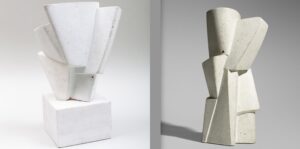
Although Rosati’s minimalist, architectonic vocabulary aligned him broadly with his better-known contemporary David Smith, he brought to Yale a distinctive clarity of structure and a disciplined sensitivity to scale. Matt absorbed this visual language with intensity, while also attending closely to Rosati’s exceptional technical fluency across materials—ranging from stainless steel and lustrous brass to the matte, velvety surfaces of zinc. Together, these lessons reinforced an understanding of sculpture as a spatial, experiential art grounded equally in conceptual rigor and material intelligence.
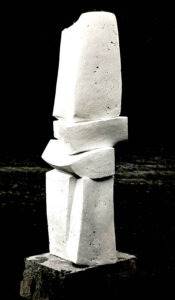
Matt clearly described his personal approach in his master’s thesis of 1968: The Progression of My Sculptural Ideas: “To me, the creation of a work of art requires personal decisions, and in that light my sculpture is a personal and private act. There are no rules that I follow except those that I may impose upon myself; no theory, only ideas that stimulate me to make into a three-dimensional reality those relationships that deal with my personal world of form. The incentive to go beyond always comes from within, regardless of outside pressures, positive though they may be.” He emphasized that the sculptural concept must transcend its materials. He declared that those materials born of modern technology have no inherent aesthetic value in themselves and instead need to be brought to life by the basic creative concept, albeit accomplished with virtuoso techniques.
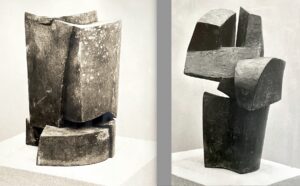
His reference to “outside pressures” referred to the omnipresent legacy of Josef Albers [1888–1976], whose Bauhaus-derived modernist principles of systemic abstraction was still being felt by all the art students during this period. After all, generations had been exposed to the legions of paintings and screenprints that comprise his iconic and repetitive series, Homage to the Square. Matt had long been motivated instead by a rigorous self-discipline in developing an approach to the non-objective, one that was consistently grounded on music and spirituality. This brought him in greater alignment with Kandinsky’s reliance on music, spirituality, and inner necessity as structuring principles for painting and sculpture. In contrast, Albers was a classical anti-romantic, opposed metaphysical thinking. He was deeply skeptical — and respectfully dismissive — of Kandinsky. He believed color had to be judged purely by empirical methods because it lacked any emotional or musical equivalence. The thought of a non-representational symphony was simply not in his vocabulary. Although separated by approximately fifty years and working in distinct formal languages, Kandinsky and Matt nonetheless reveal a consonance of intent in their shared reliance on music and spiritual inquiry as generative forces.
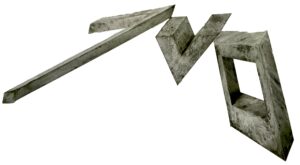
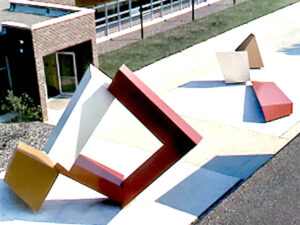
Matt would continue to exhibit, teach, and secure more commissions for installations of his abstract sculpture — the highlight of which came in 1969 with a monumental outdoor sculpture for the Evansville Day School in Indiana. The installation consisted of two sculptural groups of asymmetric geometric solids, planned to interrelate with both the school building and two large polygonal earthwork mounds designed by James E. Terrell, a landscape architect from New Haven. The segments of Matt’s installation were constructed in heavy plywood and painted separately in red, orange, or white marine epoxy. The group closest to the school’s entrance was 16-feet high. The segments evoke a sense of action, with some appearing to float, touching tenuously. Yet even as he was perfecting the illusion of monumental floating hard-edge forms, Matt could not have anticipated that his own, far more astonishing breakthrough — one without precedent in the history of sculpture—was about to unfold. 3
A Catalytic Eruption of Form in Rome
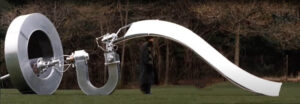
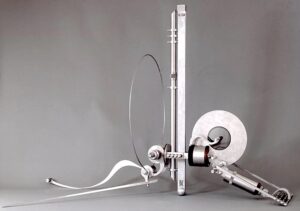
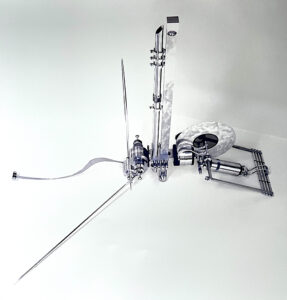
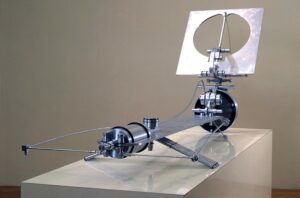
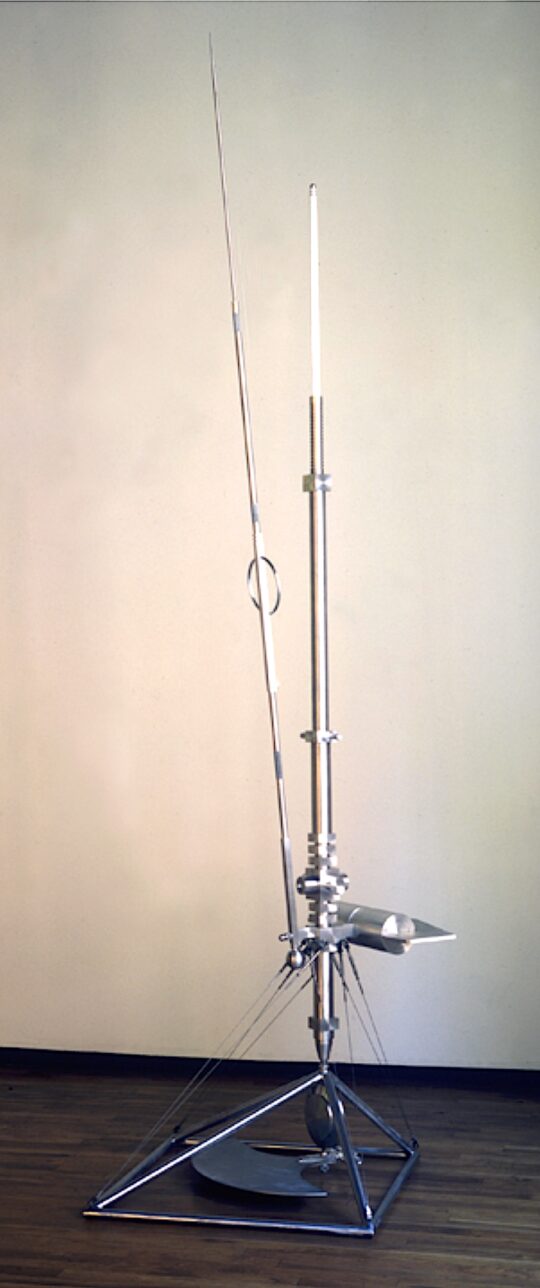
After completing the Evansville installation, Matt spent a year teaching drawing at Yale before departing in 1970 to take up his Fellowship at the American Academy in Rome. Validation of his having earned the Prix de Rome manifested within the early months of his residency. By his own account, he entered a phase of artistic production so unusually concentrated that it can only be described as a profound — and largely inexplicable — eruption of creativity. His mode of thought was not the result of a gradual evolution of experiments but a decisive and catalytic shift in his sculptural thinking. The creative outbreak that produced Tripedal in 1963 was about to become magnified in 1971 as his greatest transformation — led by the monumental Sandship I. His numerous drawings show that he appeared to acquire, almost overnight, a new formal vocabulary — one that reconciled the appearance of organic growth with an equally rigorous, machine-like precision absent the computer technology that started up later in the decade.
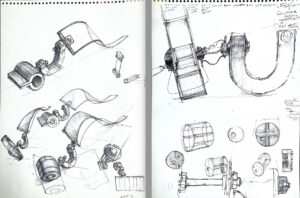
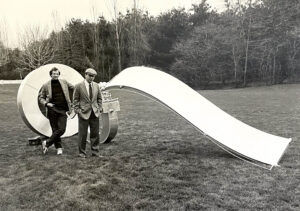
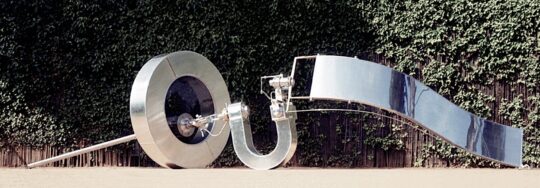
These sculptures shout that form follows function — but there was no function in these fantasy machines. Only by examining his working drawings does one notice that he did imagine injecting electronic life into these sculptures. This emergent language enabled him to produce works that challenged established expectations of modern sculpture and compelled both specialists and general audiences to reconsider the field’s operative assumptions. Contemporary critics remarked on its unprecedented presence. One described it as “a twenty-nine-foot-long shining apparition,” noting that it “filled a tennis court” and seemed to have “weightlessly settled into our planet’s gravitational embrace.” Another critic emphasized the work’s capacity to combine technological allusion with affective resonance, observing that, unlike many sculptures drawing on scientific or industrial aesthetics, Sandship I avoided impersonality. Instead, it appeared as “some dormant, mysterious machine left by a superior civilization, its meaning now lost.” In retrospect, Matt’s Roman period constitutes a rare moment in which an artist’s practice undergoes a sudden and historically consequential reorientation. The works produced in Rome and afterwards mark not only a turning point in his own career but also a distinct and enduring contribution to the broader trajectory of late-modern sculpture.
Tracing the Formative Stimuli
“Tools and machinery have always fascinated me, along with the way things are made and how they fit together. In 1970–72, while I was a Fellow at the American Academy in Rome, I moved away from clay, wax, and bronze to conceive and construct my first works in combinations of metals, wood, and plexiglas. In my studio, these diverse materials were fabricated from stock, not ‘found objects.’ Relying heavily on drawing to visualize total conception, I gradually developed these ideas. Called by a friend ‘Inventions for future use,’ these sculptures incorporated my interest in musical structure and the mystery of form, with a love of things that are well made.” 4
When confronted with a new artistic proposition as dramatically different and apart as is Sandship I and its progeny, viewers instinctively register immediate visceral reactions. Some find the work compelling; others approach it with confusion or caution. Still others are bewildered, intrigued, disappointed, delighted, or simply unmoved. Art historians are no exception. Yet almost instantaneously — within a few instinctive seconds — these initial impressions give way to evaluative questions aimed at determining whether the work constitutes a genuinely innovative contribution or merely a derivative reprise of established forms.
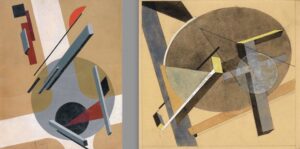
In searching for the most plausible historical source of Matt’s new sculptural language, many will quickly look to El Lissitzky [1890–1941], a central figure within the Russian avant-garde of the early twentieth century. Like his mentor, Kazimir Malevich [1879–1935], Lissitzky aspired to dismantle traditional realism by reducing imagery to simple, non-objective geometric forms — squares, circles, triangles, lines — paired with a deliberately restricted palette. Their aim was to transcend the material world through an aesthetic of pure form capable of eliciting pure feeling. Lissitzky’s celebrated Proun series, first exhibited in Hanover in 1921, therefore appears at first glance to offer a precedent for Matt’s innovations. However, when Matt was studying at Yale in the 1960s, neither he nor his fellow students would have encountered Lissitzky in the curriculum. Nor would they have encountered the constructivist abstraction of Alexander Rodchenko, László Moholy-Nagy, or Naum Gabo. Instead, American university art curricula were still largely shaped by Abstract Expressionism, and Yale specifically remained firmly rooted in Albers’s Bauhaus principles. None were widely known in Rome, either, where the focus was upon Post-war Italian modernism such as that of Lucio Fontana and Spatialism. As for Lissitzky, it was only in the late 1980s and early 1990s when he became fully recognized as a key leader of the Russian avant-garde, finally earning a secure place within the global canon of modernism.5
With historical masters avoiding being tagged as precedents, one might next turn to Matt’s contemporaries celebrated in sculpture. When Matt completed his monumental outdoor work in Evansville, Richard Serra [1938–2024] was presenting his first solo exhibition at Leo Castelli. Both sculptors produced site-specific monumental works that compelled physical engagement from viewers. Serra encouraged such interaction through his famously massive, curving steel walls. Matt, too, was concerned with the viewer’s embodied encounter, yet his 1971 forms departed entirely from the tenets of minimalism. They were not reductive but elaborately constructed — complex assemblies woven together. Each component hinted at some secret, vital function, and the whole operated like a rare, newly discovered form of music.
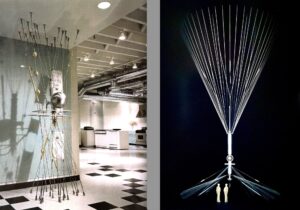
Some elements of Matt’s sculpture do share stylistic affinities with two Americans from the previous generation he never met: George Rickey [1907–2002] and Harry Bertoia [1915–1978]. Both engineered their works to be literally animated by wind or touch. Beginning in the early 1950s, Rickey devised delicately counterweighted constructions whose slender metal blades moved like free-wheeling scissors, endowed with a life of their own as they cut through space at a tempo set by shifting air currents. Bertoia extended this kinetic vocabulary in the 1960s with his celebrated “sounding sculptures” — dense clusters of vertical metal rods designed to sway, strike, and resonate when stirred by the wind or by a viewer’s hand, producing what he considered uniquely sculptural forms of “symphony.” Matt understood the symphonic conceptions, but by contrast, his works diverged sharply by remaining resolutely non-kinetic. Even while Matt spoke of his sculptures as “three-dimensional symphonies,” they were not dependent on environmental movement or tactile activation. Instead, he saw their internal dynamism arising from the orchestration of form, mass, and surface — an expressive equilibrium achieved through stillness rather than motion.
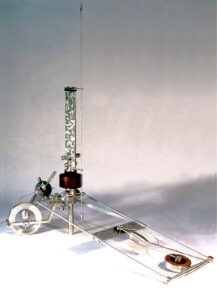
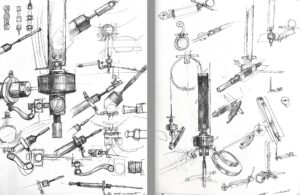
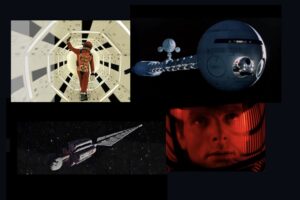
One must dig deeper, into Matt’s teenage years, to at least find subliminal triggers for Sandship. At the time, he was reading Ray Bradbury’s The Martian Chronicles. “I was very interested in his creative imagination and his ability to build visual images in the mind of the reader…There is a description of a sandship in the The Martian Chronicles that was used by the Martians to travel through the desert areas of Mars. But it is not related structurally to my work except in the fantasy of the name.” 6 Another inspirational trigger happened in 1968 when he was transfixed by Stanley Kubrick’s revolutionary science fiction movie, 2001: A Space Odyssey. For two years, the imagery of this visionary epic incubated as a catalyst in every lobe of his brain, greatly reinforcing his break-out with the profoundly divergent series heralded by Sandship.
“In what I’m doing now, I can’t say that anyone has influenced me.” 6
John Matt, 1972
It was with confidence, that Matt saw himself as an inventor, not a follower. Even though each concept germinated from hundreds of study drawings, the final form almost always changed during construction. In a rare moment of self-explanation, Matt offered the following reflection:
“Music has always been an intrinsic source of inspiration in my art. When I create, I often imagine that I am sculpting in sound. The abstract ‘notes’ of my vision are typically fleshed out in detailed drawings and then translated into the tactile language of line and shape, space and form, texture and color. In short, I compose three-dimensional symphonies. The complexity of my musical vision was not always so polyphonic. When I first began to build sculptures, I only played one instrument at a time, so to speak. I modeled in clay, carved in wood and stone, and cast in bronze via wax. Experiments in welding, brazing, and soldering added tonalities to what were still rather simple songs. That all changed one day in 1971 while I was working on a piece in my studio at the American Academy in Rome. I remember being suddenly struck by the desire to combine a variety of materials into a single form.” The catalyst for that sudden desire came as he looked out the window and focused on the wooden telephone poles with mechanical attachments, including the large transformer boxes, insulators, fuses, compression clamps, and various wires. He was intrigued at how those elements appeared to be sculpturally untied. While The Martian Chronicles and 2001: A Space Odyssey were subliminally seductive, it was the inspiration of telephone pole mechanics that was the final trigger. “Soon nothing could hold me back from orchestrating a synthesis of stainless steel, brass, and stone, or from blending the seemingly disparate sounds of aluminum, wood, lead, and plexiglas into a contrapuntal unity. I quickly attuned my ear to an infinite array of multi-media possibilities and have never turned back.”
Inventions for Future Use
Matt’s breakout sculptures were first exhibited in 1971 at Scultura, the influential exhibition mounted at the American Academy of Rome. With striking rapidity, this debut was followed by a solo exhibition that autumn at the Alexander F. Milliken Gallery, held at the dealer’s eponymous space on Prince Street in SoHo. The success of that exhibition established the momentum for Matt’s rising prominence throughout the decade. Professional recognition soon followed: he was appointed Sculptor-in-Residence at Trinity College (1972–73), and from 1973 to 1976 served as Sculpture Instructor at the Rhode Island School of Design. In 1973 he was elected to membership in the Louis Comfort Tiffany Foundation, and in 1976 was further entrusted with a position as Trustee.
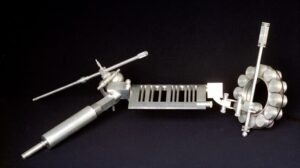
When Milliken presented a second solo exhibition of Matt’s work in 1979, the critic and sculptor John Wharton offered a notably emphatic assessment. “This latest show of John Matt’s work is breathtaking,” he wrote, observing that it was “as if he has stored up all the sophistication developed by sculptors and designers during the last fifteen years and is now ready to rewrite the aesthetic and to take it to some logical conclusion.” Wharton pointedly continued: “John Matt’s latest show marks him as an important sculptural force. The incredible amount of time spent machining, milling, fitting, and finishing place him apart in terms of commitment. There are no shortcuts taken, no easy answers accepted in his pursuit of technical perfection. Matt is aware that it is this technical wizardry which initially engages the viewer and then draws him into an exploration of the object and eventually into involvement with its totality. The thousands of hours which Matt has lavished on these pieces is the price he pays for this engagement. It is the dedication of the sharing of a vision found in all compelling and powerful art.”
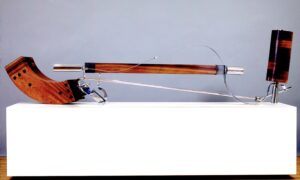
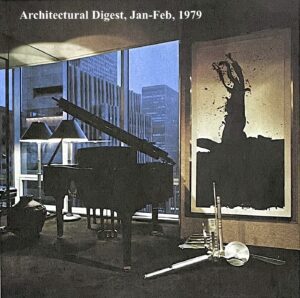
Concurrently, Matt’s work entered a broader cultural visibility. Architectural Digest illustrated two of his sleek, polished sculptures installed in an apartment in New York’s newly completed Olympic Tower. One was carefully positioned in dialogue with a large black-and-white painting by Robert Motherwell; another was shown mounted on a marble-clad living-room wall, underscoring the ease with which Matt’s rigorously constructed forms operated within both architectural and aesthetic contexts. 7
A Resonant Coda
During the 1960s, Matt’s irrepressible spirit to experiment and innovate led him to master biomorphism (1960–63), then monumental architectonic forms (1964–69). During the 1970s he invented his own unique approach to abstract sculpture in Sandship I and its offspring, which earned him critical recognition for his pioneering technological aesthetics. He would continue to exhibit them into the 1980s at the American Academy and Institute of Arts and Letters in New York and at the Public Art Trust in Washington, D.C. The last works in this family are from 1997-98, and incorporate heavy cables
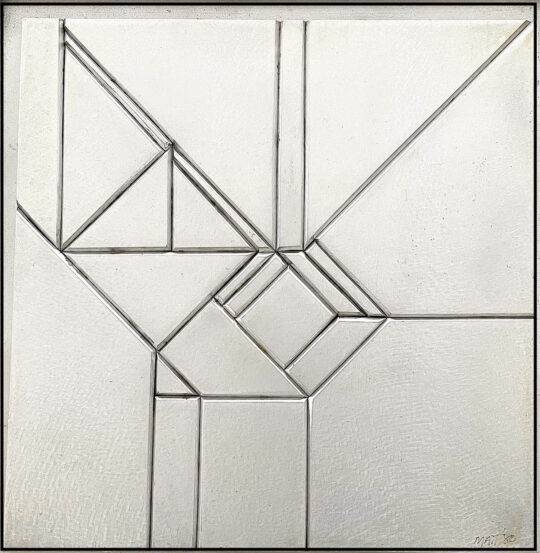
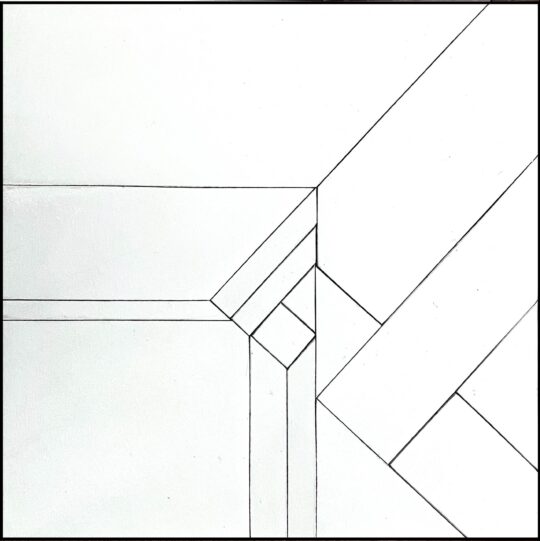
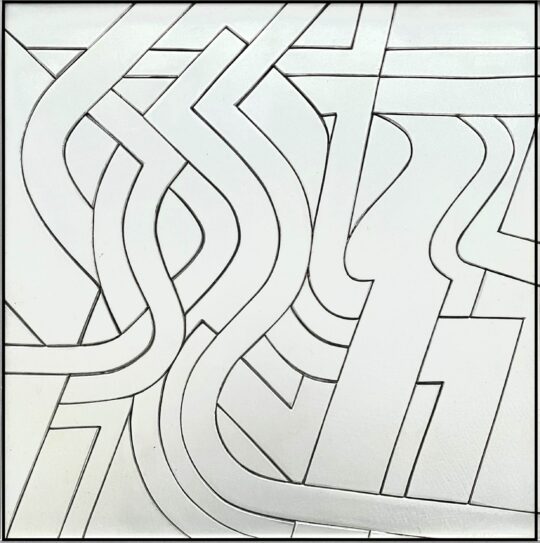
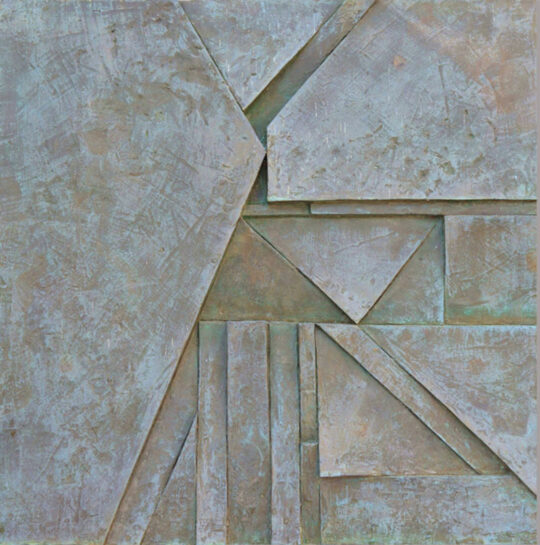
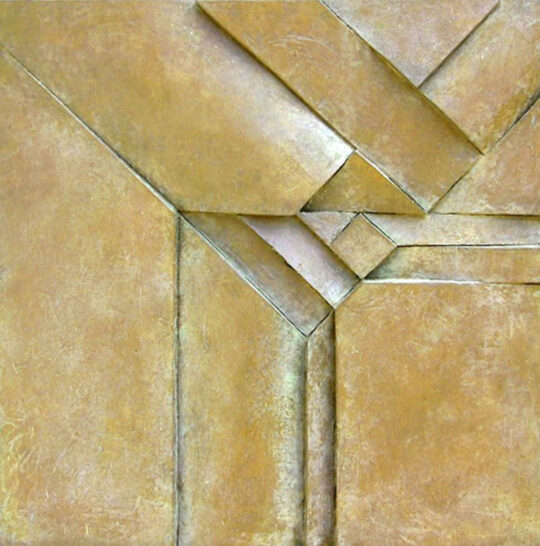
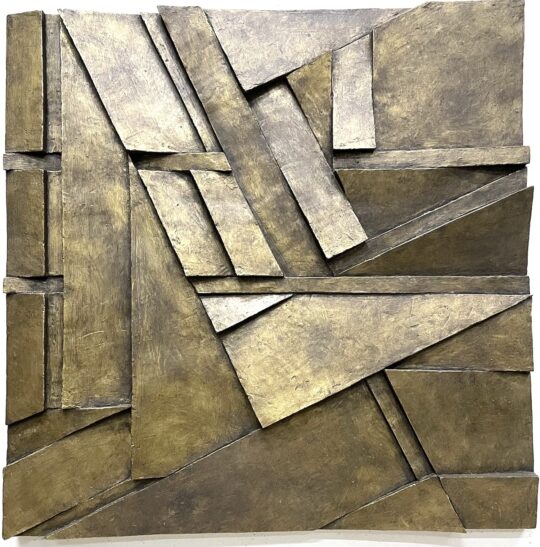
The minimalism he had explored at Yale in the mid 1960s came full circle in 1980 with his bas-reliefs in aluminum. These were followed by bas reliefs like Herald (1981), sculptures like the Marker Series (1988) and more bas-reliefs in the Canto Series (1991). In 1985, his Bristol Wall Series — eight six-foot metal assemblages — are reprises to the family of Sandship I albeit in haute relief.
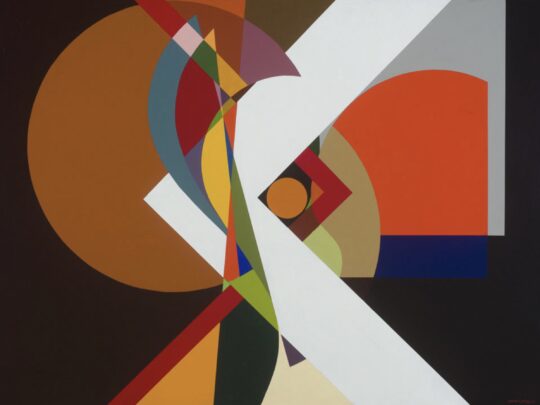
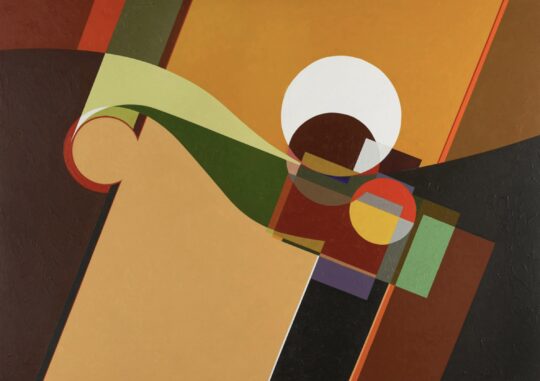
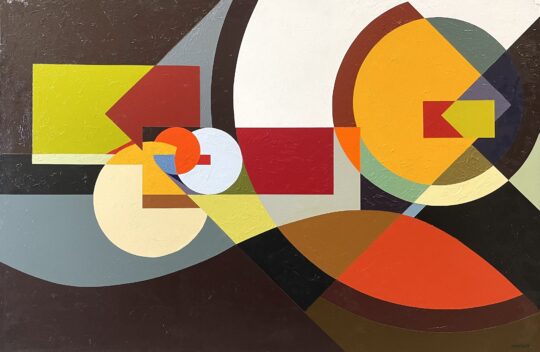
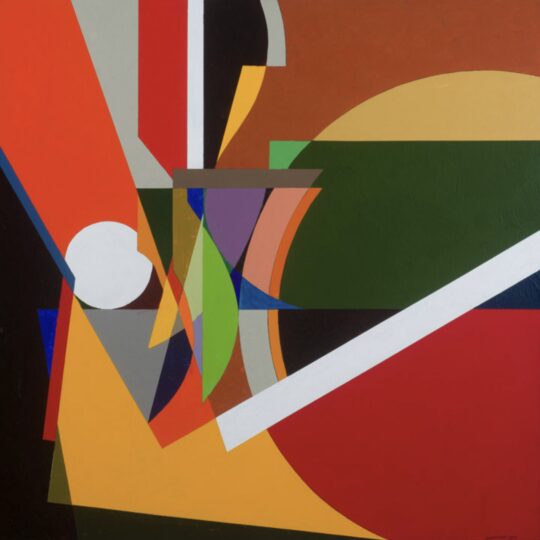
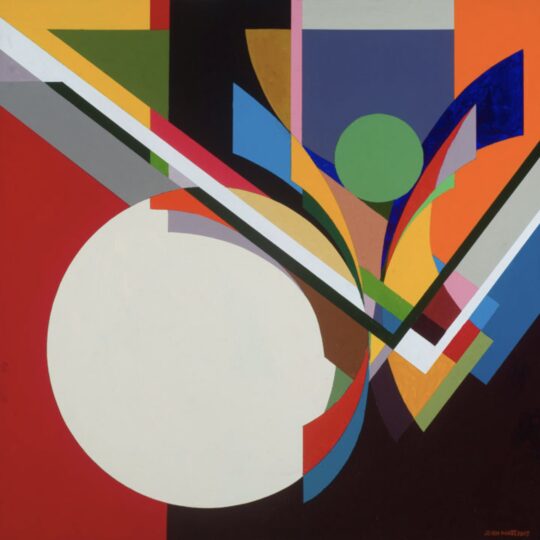
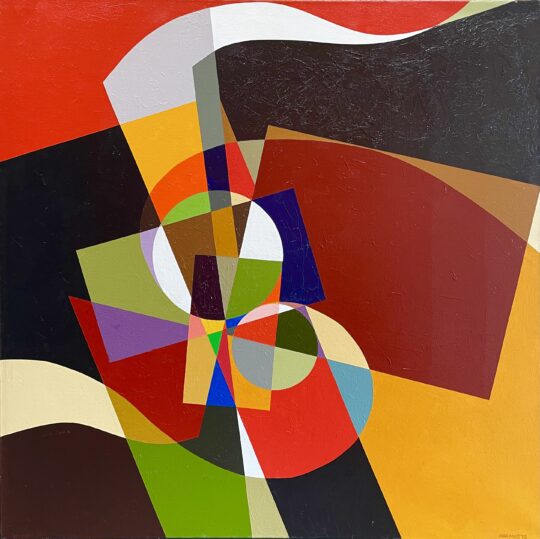
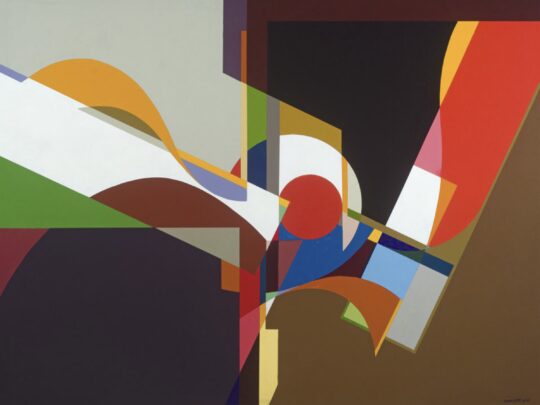
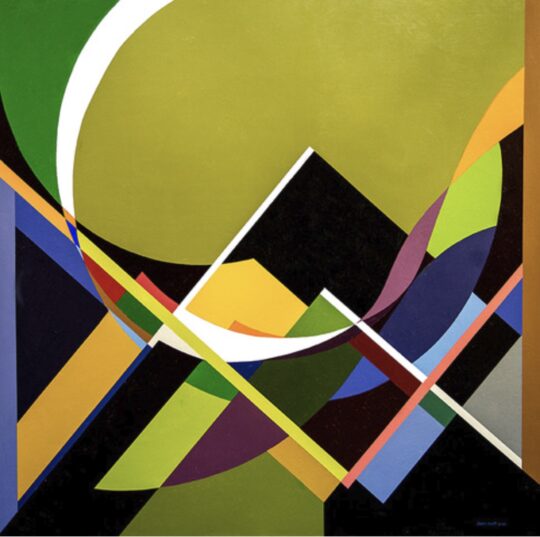
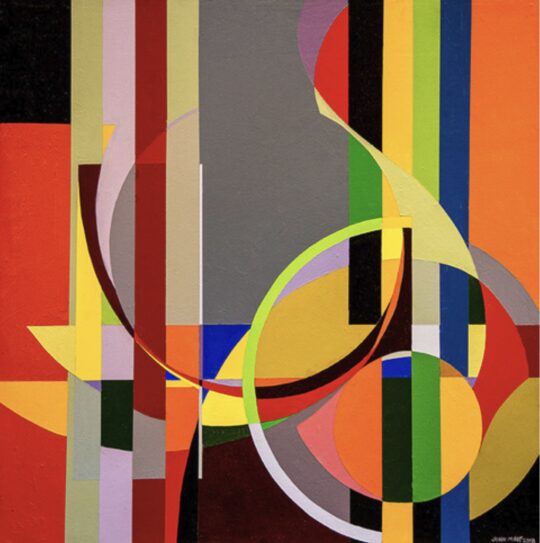
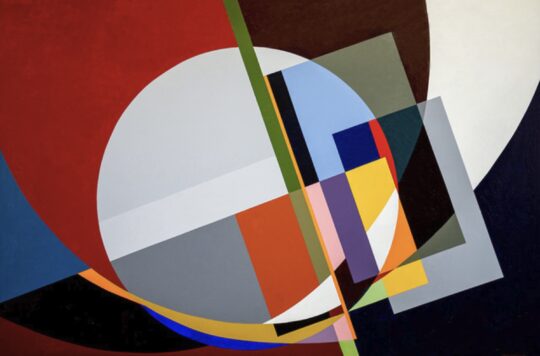
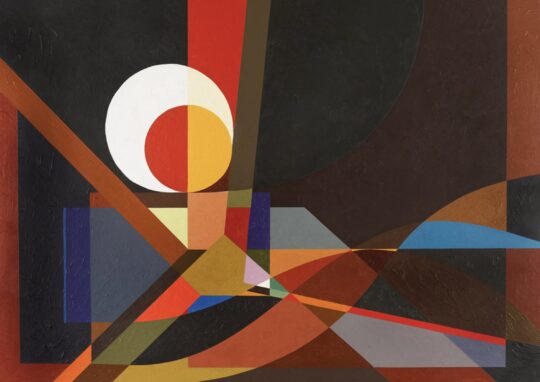
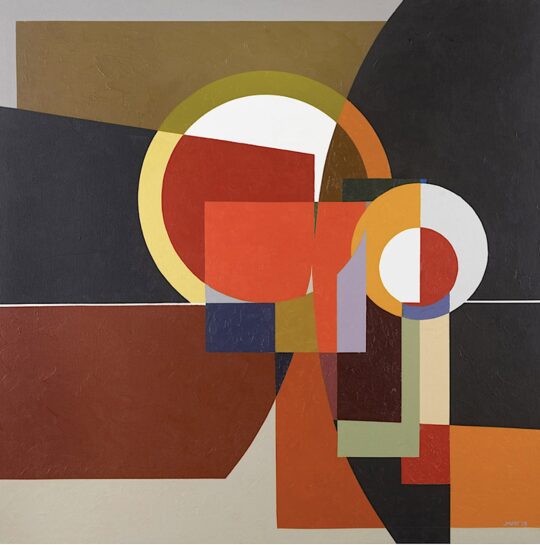
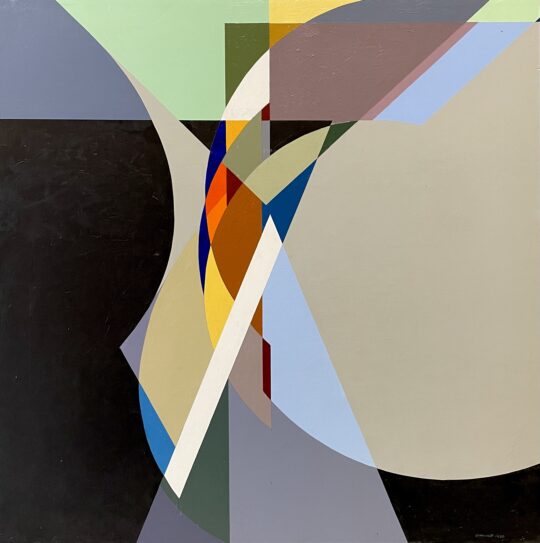
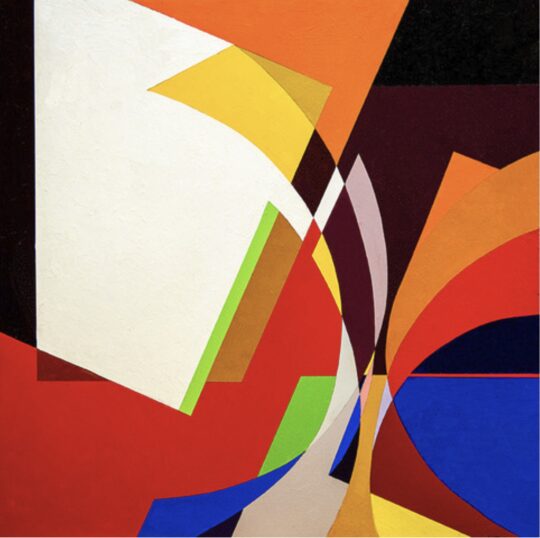
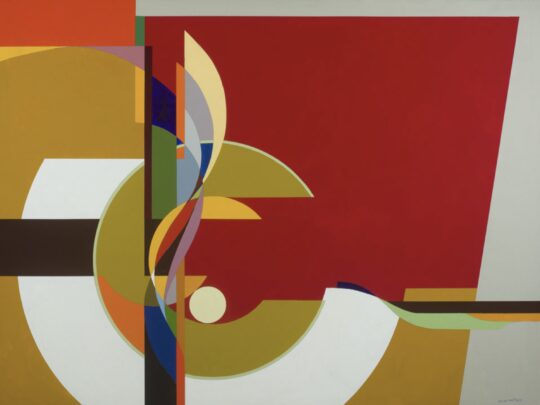
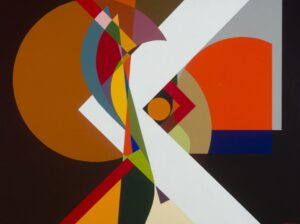
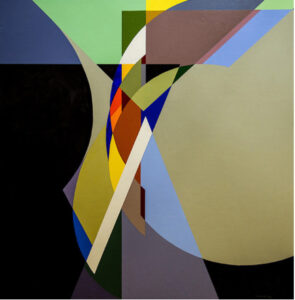
As Matt entered the 21st century, he returned to painting in acrylics and continued to pursue his own holistic approach in expressing hard edge abstraction. Any affinities with post-war American painters lie less with shapes and colors and more with music and rhythm as inspirations. For example, the post-war paintings of Burgoyne Diller [1906–1965] are composed of primarily vertical and horizontal lines and color shapes set in modular repetition and rhythmic sequencing. His counterpoint in classical musical serialism was Bach. The compositions of Ilya Bolotowsky [1907–1981] are also structured by repetition and he, too, had a strong interest in musical rhythm. Matt’s paintings make clear that the sensibility he brought to his sculpture followed through to his later canvases. They reveal that throughout his career he had always emphasized the power of line — from the use of melodic line weight in his contour figure drawings at PAFA to his abstract figurative drawings at Yale. The importance of the edge continues with the extraordinary Sandship family of sculptures, through to the linear flow of his wire sculptures of the mid 1970s, all the way to his last major metal work — Crescendo (1997). With cables bolted to the floor and ceiling, this work asserts its need to stay locked in place, suggesting a vital mechanical function operating at its core.
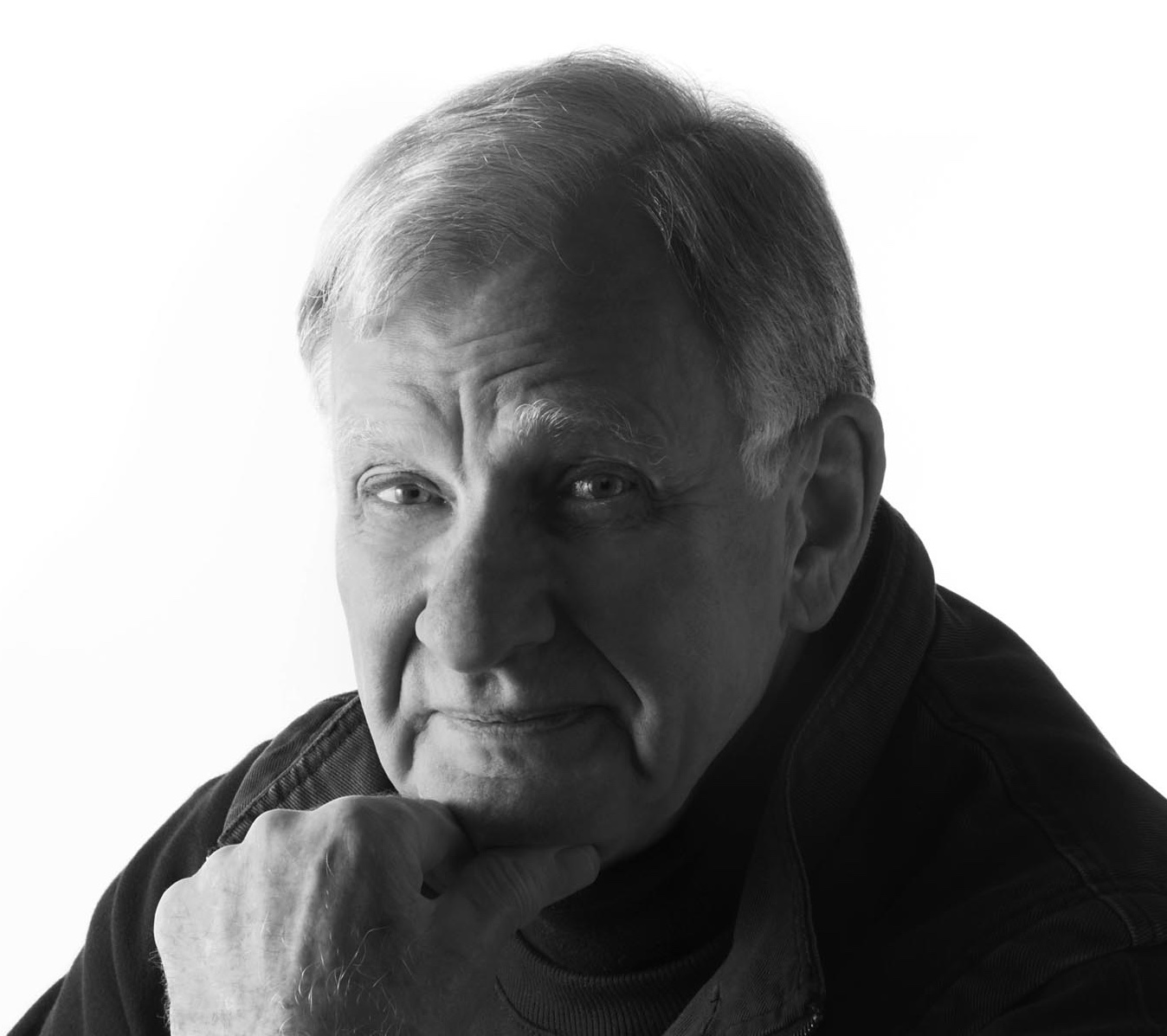
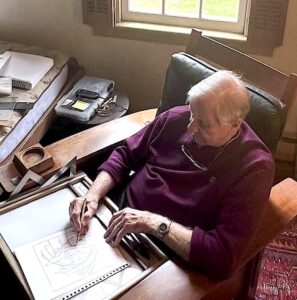
At ninety-one, Matt continues to push the boundaries of hard-edge geometric painting with undiminished rigor. His working method remains fastidious—indeed, almost compulsive—beginning with hundreds of preparatory drawings, followed by carefully calibrated pochades in color. Many of these works evoke complex, imagined mechanisms, their implied movements brought to life through a finely tuned balance of form, proportion, and chromatic rhythm.
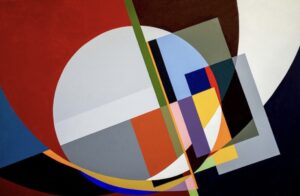
Ultimately, whether encountered as sculpture or painting, Matt’s work reveals a sustained and coherent artistic vision—one in which precision serves expression, and structure gives rise to resonance. Across media and decades, his art affirms that abstraction need not relinquish human presence; rather, in its most resolved form, it can stand as a lucid embodiment of intellect, discipline, and imagination brought into lasting equilibrium.
Peter Hastings Falk
Footnotes
1 Hunt graduated in 1957 from the School of the Art Institute of Chicago. In the early 1960s, he began to explore turning geometric machined forms found in scrapyards, transformed by welding various metals together into biomorphic forms. In 1962, the same year he was the youngest artist exhibiting at the Seattle World’s Fair, he was also awarded a Guggenheim Fellowship for sculpture.
2 Bernard Chaet was chairman of Yale’s Art Department. He was known for balancing modernist abstraction with rigorous drawing and painting traditions, but architect Paul Rudolph was Dean of the School of Art and Architecture from 1958–65. Even though he was an architect, as dean he effectively oversaw the School of Art as well, before the two were administratively separated in 1969.
3 The Evansville Day School continues to refer to its “iconic John Matt sculpture,” and local obituaries about the donors who commissioned it note that it “still stands in front of the school.” The Smithsonian Art Inventories Catalog also lists this work. Articles include: “Giant Sculpture Takes Ride” (Conn: Clinton Recorder, 8 May 1969, p.1); Gumberts, William. “The Art Scene in Evansville” (The Evansville Press, 1969, undated article); and, Greenwall, Philip. “A Modern Sculptor Who Likes the Past” (New Haven Register, 2 Aug 1970, p.6B.
4 “Four Sculptors” Public Art Trust, Washington, D.C., 1986
5 The earliest scholarship on Lissitzky began in the early 1970s. For example, Alan Curtis Birnholz’s “Notes on the Chronology of El Lissitzky’s Proun Compositions” was published in The Art Bulletin in 1973. Suprematism would have had a seismic effect on the art world — except World War I was busy weaving a path of destruction and social upheaval. Even after the Armistice of 1918, all of Europe would remain mired in a twenty-year depression. In Germany and Russia, severe hyperinflation ruled and their financial systems collapsed. France could not bear the weight of its financial debt, especially since the reparations it expected from Germany were never fulfilled. England became the world’s largest debtor of all and suffered well into the 1920s. Only the United States saw its economy boom during the “Roaring Twenties — yet it suffered with the whole world during the Great Depression of the 1930s. So, while Suprematism certainly made jaws drop throughout the avant garde, the social climate made collecting fine art seem indulgent, decadent, and morally drifting.
6 Curley, Patrick. “A Conversation with Sculptor John Matt” in The Trinity Tripod (Hartford, Trinity College, 1972, during Matt’s solo exhibition at the Austin Arts Center)
7 Wharton, John. “John Matt” (Arts Magazine, Jan. 1979, p.7). John Wharton [1939–2009] was appointed Chairman of the Art Department at the Phillips Exeter Academy in 1975 and held that position until retiring in 2000. Also: Carlsen, Peter. “New York Simplicity: A Sleek Contemporary Design for the Olympic Tower” (Architectural Digest, Jan-Feb, 1979, p.85–87)
Select Sources
Zelanski, Paul and Fisher, Mary Pat. Shaping Space: The Dynamics of Three-Dimensional Design (Wadsworth Publishing, 1995, p.43). Illustrating Wind Chant, 1979 — aluminum and hardwood, 74.5 in high x 81 in long x 31 in wide.
Matt, John. “The Progression of My Sculpture Ideas, 1965–1968” (Yale University, Thesis for Masters of Fine Art degree, 1968)
Annual Exhibition of the Fellows and Residents of the American Academy in Rome [Annuario-catalogo dei giovani borsisti di istituzioni straniere a Roma] exhibition catalogue, 1971, illustrated p.10–11: painted sheet brass, 16 in high x 53 in long.
The Carborundum Sculpture Awards, 1961–1965 — A Five-Year Retrospective (New York: American Federation of the Arts, 1966 [features 5 sculptors, including James Rosati, then teacher sculpture at Yale]
Kubler, Edward G.A. “A Note on the Sculpture of John Matt” (exhibition catalogue for the solo exhibition, Sculpture by John Matt, at the Jorgensen Gallery, University of Connecticut, 1977)
Pacheco, Richard. “Blueprint for Sculpture” (New Bedford: Standard Times, Feb 1978)
 DETAILS
Sandship I (full-length, 29 ft) , 1978
348 x 60 inches (883.92 x 152.4 cm) DETAILS
Sandship I (detail-a) , 1978
348 x 60 inches (883.92 x 152.4 cm) DETAILS
Sandship I (detail-b) , 1978
348 x 60 inches (883.92 x 152.4 cm) DETAILS
Windchant 2 , 1971
54 x 54 inches (137.16 x 137.16 cm) DETAILS
Brink 2 , 1978
51.5 x 18 inches (130.81 x 45.72 cm) DETAILS
Harbinger , 1978
60 x 36 inches (152.4 x 91.44 cm) DETAILS
Mediator , 1980
180 x 54 inches (457.2 x 137.16 cm) DETAILS
Escort 2 , 1980
96 x 36 inches (243.84 x 91.44 cm) DETAILS
Danseuse 2 , 1978
13.5 x 4.5 inches (34.29 x 11.43 cm) DETAILS
Relief No.1c 2 , 1980
24 x 24 inches (60.96 x 60.96 cm) DETAILS
Relief No.2 2 , 1980
24 x 24 inches (60.96 x 60.96 cm) DETAILS
Relief No.3 2 , 1980
24 x 24 inches (60.96 x 60.96 cm) DETAILS
Canto I , 1991
24 x 24 inches (60.96 x 60.96 cm) DETAILS
Canto II 2 , 1991
24 x 24 inches (60.96 x 60.96 cm) DETAILS
Canto IV 2 , 1991
24 x 24 inches (60.96 x 60.96 cm)
 DETAILS
Canticle , 2015
36 x 48 inches (91.44 x 121.92 cm) DETAILS
Connection , 2013
37 x 48 inches (93.98 x 121.92 cm) DETAILS
Dateline , 2013
38 x 48 inches (96.52 x 121.92 cm)- DETAILS
Epic III , 2015
39 x 48 inches (99.06 x 121.92 cm) - DETAILS
Epic IV , 2015
40 x 48 inches (101.6 x 121.92 cm)  DETAILS
Joy , 2013
41 x 48 inches (104.14 x 121.92 cm)- DETAILS
Justice , 2015
42 x 48 inches (106.68 x 121.92 cm)  DETAILS
Legends , 2014
43 x 48 inches (109.22 x 121.92 cm)- DETAILS
Loving , 2018
44 x 48 inches (111.76 x 121.92 cm)  DETAILS
New Day , 2021
45 x 48 inches (114.3 x 121.92 cm) DETAILS
Pathway , 2013
46 x 48 inches (116.84 x 121.92 cm)- DETAILS
Peace , 2013
47 x 48 inches (119.38 x 121.92 cm) - DETAILS
Slice of Life , 2020
48 x 48 inches (121.92 x 121.92 cm)  DETAILS
Sprout , 2017
49 x 48 inches (124.46 x 121.92 cm)- DETAILS
Tranquility , 2015
50 x 48 inches (127 x 121.92 cm)