
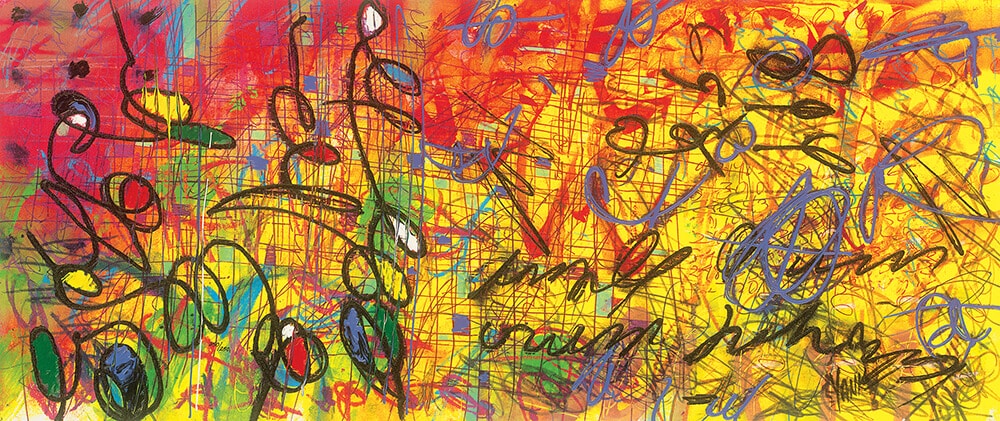
— Part One of the Rediscovery Series
By Peter Hastings Falk, Editor & Curator, Discoveries in American Art When I begin examining an artwork, I am not thinking about price. I am absorbing the initial impact (if any) of inherent qualities of the visual message the artist was trying to express. Progressing from work to work, a clearer picture emerges that allows me to assign grades of A, B, or C — from most successful to least — as they relate only to that specific artist. What was the artist was striving for and where does each work fit within the arc of their entire creative life?
With rediscovered artists, this question becomes even more important. After all, if the artist i to be rediscovered, the very word denotes that they achieved some valid recognition in their lifetime long before becoming neglected. And if they never achieved any recognition, then the project should be called a “discovery.” Both discoveries and rediscoveries are fascinating because there are always compelling reasons why the artist slipped from sight. But those reasons will be covered in another part of this series.
Many dedicated entire lifetimes to their art without receiving meaningful public attention. Their strongest works often never left the studio. Their exhibitions were sparse or non existent. Piecing together their stories not only requires pouring through portfolios of sketches and stacks paintings but examining diaries, letters, and notes to hopefully get at least a glimpse of the artist’s soul.
So, when heirs as me to examine an artist estate collection, they often want to understand the artist they never fully knew. They want to understand the scope of the artist’s vision and why it never lived on in public reignition if, indeed, it had ever achieved such recognition in the first place. They are not simply asking the market value the works. They want to know to what extent the work could really matter in the course of American art history.
That is where an artist estate collection specialist with educated eye I also an art historian who can give insights far beyond the valuations of even a respected appraiser. A thorough approach studies the artist’s development, understands shifts in technique, and identifies periods of genuine breakthrough.
This series is meant to show how that process unfolds. Each part will look at a different stage of rediscovery.
Looking Closely
Trying to judge an entire artist estate collection by choosing a single artwork to examine is to miss the forest for the trees. It’s easy to become misguided by one work and lose perspective on the promise or the problems with the entire collection. Full appreciation starts with closely looking at each work. I naturally start with trusting a visceral reaction to quality and innovation. How the artist handled form, structure, color, and space to elicit my reaction? What are the signs of a truly independent voice? Sure, all artists were influenced by predecessors, but what did this artist do to convince me that their expression was innovative and not slavishly derivative? This is often where the story of a successful rediscovery project must begin. Many overlooked artists developed strong personal styles that went unnoticed simply because no one took the time to look carefully — or the artist was never concerned with being in the limelight in the first place.
Recognizing that special spark of creativity is the first step toward placing the artist back into the broader conversation of American art. It demands patience, comparison, and deep experience — not quick judgments and broad generalities.
Following the Artist’s Development
Every artist leaves behind a trail. If we charted an artist’s creative output on a graph over their lifetime, we would see a curve that may rise quickly, then plateau, and finally precipitously. We will also see curves that range from smoothly consistent to wildly volatile. There may be a period of sudden confidence. There may be years of experimentation. There may be a return to earlier ideas with greater clarity. When reviewing an artist estate collection, I lay out these periods of works in groups as part of the grading process.
With rediscovered artists, most of these developments were never recorded because of the lack of regular gallery representation or museum exposure. Rediscovery means piecing together these chapters for the first time. And once the arc becomes clear, the individual works gain meaning they could not have communicated alone.
Later in this series, I will explain how we map out these turning points and how they guide future curation.
Condition in Context
Physical condition matters. Many estates have been stored for decades in basements, attics, or old studios. Surface scuffs, minor cracks, or pigment loss does not erase the strength of the idea behind the work. Many issues are easily addressed by restoration experts. We will cover conservation and restoration choices in a future part of this series.
Where the Market Fits In
Most rediscovered artists have little to no auction history. The absence of sales does not reflect a lack of quality. It usually means the artist estate collection remained in storage, out of sight and out of mind. It could also mean the collection was spread to the four winds many years ago, leaving it nearly impossible to reassemble the puzzle. But understanding if a collection is worth carefully developing for reintroduction to the art world begins with connoisseurship. It must be tied to innovation, quality, and the artist’s place in the historical timeline. Regardless of whatever low auction price results may say, it takes a best art appraiser expert with deep historical knowledge to determine if the particular artist estate collection instead possesses a much greater value — a value that has been long pent-up and can only be released by building a scholarly foundation beneath it. If the backstory is built without hype and fluff, the market often follows.
The Record That Remains
The final stage in this first phase of rediscovery is documentation. For estates, this becomes the catalogue raisonné. Each work is photographed, identified, measured, and placed in sequence. Provenance and inscriptions are among the noted details. This becomes the foundation for future scholarship and the anchor for institutional confidence.
A deeper look at how catalogues raisonnés are assembled will appear later in this series.
What Comes Next
This opening piece sets the stage for the next instalments where I will explore:
- how to recognize innovation in overlooked artists
- how museums evaluate rediscovered artists
- how a collection moves from storage into public visibility
Rediscovery is not a single decision. It is a process that reveals how an artist thought, worked, struggled, and finally found their voice. And at its best, it restores to history the contributions that were nearly lost.